Idaho has often favored a libertarian approach to planning, with few rules about what is allowed. Within Bonner County, this has been particularly apparent. While some municipalities have created more rules and regulations as more people moved in, Bonner County has often historically gone the opposite direction into deregulation. A lack of regulation can be good or bad, depending on what is being regulated. So the question is: what should rules cover, and who does it benefit when there are no rules?
When it comes to land use, rules are supposed to ensure public health and safety, long-term as well as short-term. Deregulation in land use tends to favor people who want to make money even if it puts public safety at risk.
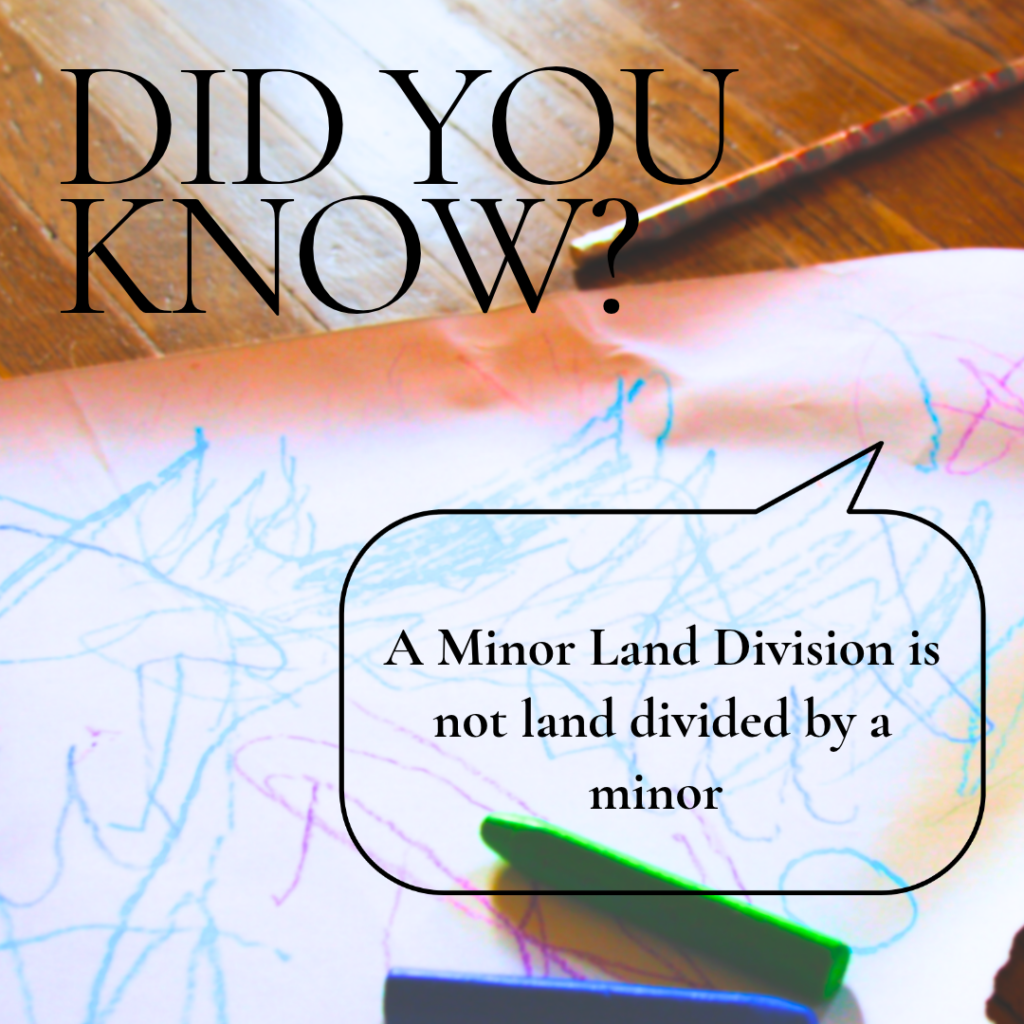
For example, minor land divisions (MLDs) were a peculiarity of Bonner County planning. Starting in 2016, by using the MLD process, practically anyone could file to subdivide a parcel of land into 2-4 parcels, and no checks and balances were required — neighbors were not notified, no public hearing was held, and there was no sign-off to ensure road, fire, water, or sewer safety.
Because there was little oversight, MLDs threatened safety, increased sprawl, and encouraged poor development. They were one of the major reasons Project 7B started, and we researched them pretty extensively. We found that between 2017 and 2023, about 75% of all the new lots in Bonner County were created using the MLD process.
MLDs were touted as an example of “deregulation” and cutting red tape by advocates of the process. But at what cost to the county, county taxpayers, and individuals who unwittingly purchased lots created through this process?
After buying a lot created via the MLD process, one homeowner said he spent $200,000 trying to fix issues that would have been caught by more regulation. “The water turned out to be contaminated with E. coli bacteria, the property often floods because it was built on a wetlands, the community septic system doesn’t work properly and the homeowners later found out they probably don’t have a legal right to use the only road that serves as access from U.S. Highway 95.” So he and others who had bought surrounding MLDs sued Bonner County and the realtors who had sold them the property — thus spreading the cost of deregulation to taxpayers, realtors associations, and more. Read more here.
In another instance, the Idaho Supreme Court found that a developer used MLDs to specifically avoid checks and balances for subdividing land. In this case specifically, legal protections for a pristine wetlands on Priest Lake — protections that were overwhelmingly supported by Priest Lake residents.
Due to these issues and public pressure, Bonner County did away with MLDs in November 2025 on a 2-1 split vote. Details on this are here.